Last Updated: October 11, 2026
Table of Contents
Introduction
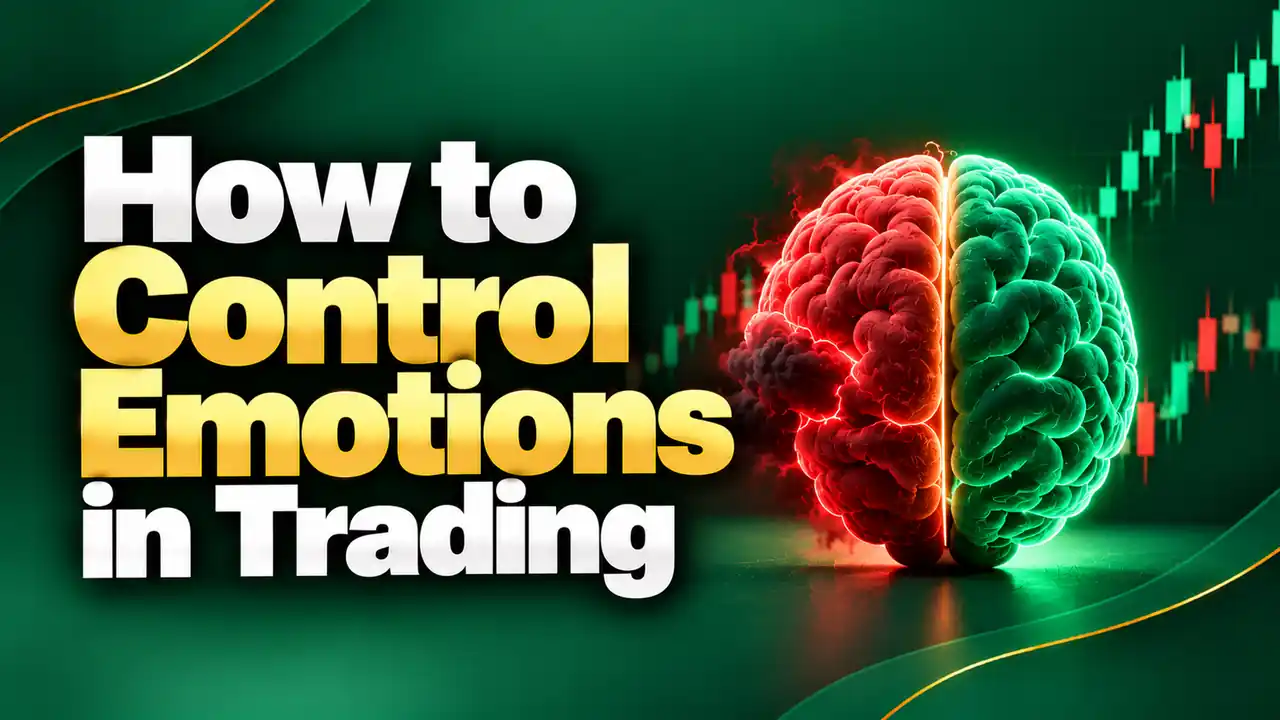
How to Control Emotions in Trading becomes a real question when a trade starts moving against you, and your original plan suddenly feels hard to follow. You may want to move the stop, enter again immediately, or close a valid position to end the discomfort. The chart has not necessarily changed; your response has.
The aim is not to eliminate fear, frustration, or excitement. It is to stop those feelings from rewriting decisions you made before the pressure arrived. The approach below focuses on catching the moment an emotion turns into an action, then replacing the impulse with a rule you can repeat.
How to Control Emotions in Trading Without Trying to Feel Nothing
A feeling doesn’t prove a trade is good or bad. Nervousness can appear before a valid setup, and confidence can show up when a trade is poorly planned. Treat the emotion as a signal to check yourself, not as an instruction to buy, sell, or exit.
CME Group’s Trading Psychology course covers psychological barriers, managing losses, and the value of a trading plan suited to the individual. That is a useful distinction: discipline is easier to practice when you write your rules before the market starts testing them.
A simple question can help: “What am I about to do, and is that action in my plan?” If the answer is no, do not dress the impulse up as analysis.
Find the Moment Your Plan Starts to Break
Emotional trading usually shows up in action rather than in the feeling itself. A useful way to approach How to Control Emotions in Trading is to track your actions, not judge yourself for the feeling. This is an important distinction in How to Control Emotions in Trading: the trigger is a behavior you can observe and change. Watch for the specific moment you begin to:
- Move a stop farther away because taking the planned loss feels uncomfortable.
- Chase a candle after the entry you wanted has already passed.
- Increase position size to recover a loss or because recent wins have made you overconfident.
- Take another trade without a valid setup because sitting out feels frustrating.
- Close a planned trade early just to stop looking at fluctuating profit and loss.
Choose the behavior that causes you the most trouble and write one rule for it. For example: “If I miss the entry, I wait for a new setup; I do not chase the current candle.” A specific rule is easier to follow than telling yourself to be disciplined. This is where How to Control Emotions in Trading becomes practical: you are changing one repeatable behavior, not trying to redesign your personality.
For leveraged forex trading, the CFTC’s forex customer advisory stresses understanding the risks and planning how much risk capital you can afford to use. Emotional control cannot replace risk management; it works alongside it.
Put a Pause Between the Feeling and the Order
When an urge appears, do not make the next click your immediate response. Use a short reset that does not depend on guessing the market’s next move:
- Name the feeling: fear, frustration, FOMO, or overconfidence.
- Name the action it is pushing you toward: move the stop, chase, enlarge the size, or re-enter.
- Check the original trade plan and risk limit.
- Continue only if the planned conditions are still present. Otherwise, stand aside.
This pause is not a trick that guarantees calm or a better trade. Its job is to create enough space to compare the impulse with your written rules. The point of How to Control Emotions in Trading is not to pause forever; it is to make the next action intentional.
Before placing an order, also check your position size and stop distance. Shahzeb Trades’ guide to risk management in trading explains why you should decide on planned exposure before opening the trade. If the potential loss feels unbearable, reduce the size or skip the trade according to your plan rather than changing the stop to make the discomfort disappear.
A Worked Example: One Loss, Two Different Responses
Suppose a trader has a $2,000 account and has chosen a $20 planned risk for a particular setup. The trade reaches its stop. The $20 loss is real, and frustration is understandable.
Another setup appears, but it doesn’t meet the trader’s full entry criteria. One response is to enter with a larger position to win the money back. The other is to skip the weak setup, record the first trade, and wait for the next valid opportunity.
The second response doesn’t guarantee the next trade will win. It simply prevents the first loss from setting the size or purpose of the next trade. This is how to control emotions in Trading in the moment: follow the setup criteria even when you still feel the urge to recover money. That is how you control emotions in a real decision: judge the next setup on its own conditions, not on what you want the account balance to become.
Use Your Journal to Find the Trigger
To control emotions in Trading, a journal is most useful when it records behavior as well as entry, exit, and result. After a session, note the trade setup, planned risk, whether you followed your rules, the strongest emotion you felt, and the action that followed it.
Keep the note factual. “I felt frustrated after the stop and entered before my confirmation candle” is more useful than “I had a bad mindset.” Review these notes across a meaningful sample of trades. That review gives How to Control Emotions in Trading a specific target for improvement. You may find that you break the rules mostly after a loss, during fast moves, or when you trade outside your planned session.
Once you identify a recurring trigger, change one behavior at a time. If losses lead to immediate re-entry, add a cooling-off rule. If FOMO leads to chasing, define when an entry is considered missed. For more related guidance, read the Forex trading psychology guide.
When the Right Move Is to Stop for the Day
Controlling emotions in trading also means deciding in advance when you will close the platform. Sometimes the disciplined decision is to stop rather than keep looking for a trade. Consider ending the session when you reach your predefined daily loss limit, break an important rule, take repeated impulsive trades, or notice that you are trying to recover money rather than evaluate setups.
Choose those conditions before the session begins. Do not wait until you are upset to negotiate with yourself about whether the rules count today. If you repeatedly cannot follow your plan, step back and review the process before increasing trading activity or risk.
FAQs
How do I control emotions in Trading after a loss?
Pause before the next order and check whether the new setup meets your plan. Do not increase size or enter again to recover the previous loss.
Should I trade when I feel afraid?
Fear alone doesn’t prove a setup is wrong. Check your entry criteria and planned risk; if you cannot follow them objectively, skip the trade or stop the session.
Can a trading journal reduce emotional mistakes?
A journal can reveal recurring links between feelings and actions. It cannot prevent every mistake, but it gives you specific behaviors to work on instead of relying on a vague promise to be disciplined.
What if I keep breaking my own rules?
Reduce complexity and review the trades where the rules failed. Consider a defined cooling-off period or stopping for the day, and do not increase risk while execution remains inconsistent.
Risk Disclaimer
Forex and gold trading involve significant financial risk, especially when leverage is used. Emotional-control techniques cannot remove market risk or guarantee profits. This article is for education only, not personal financial advice. Understand your broker’s terms and trade only with capital you can afford to lose.
Conclusion
Controlling emotions: Trading is less about forcing yourself to feel nothing and more about protecting your next decision from the last emotion. Notice the urge, compare it with your written rules, record what happened, and stop when your predefined conditions say to stop. Your emotions may still appear. They do not have to choose your next trade. With consistent practice, controlling emotions in Trading becomes less about one perfect session and more about keeping decisions within a process.